
Self-boundaries
12 hours to get to a ‘no’ that I could stick to

Hiiiii! Welcome to Wandering Grace. I share essays exploring the themes of place and (be)longing 1-2 times a month. This season, I am exploring being at home in our bodies and our nervous systems. See an archived list of previous Migration Tour essays here.
Today, I’m writing about self-boundaries in an autistic body. I also really want to tell you about two classes coming up in April from some of my fave boundary teachers. First, MINKA Institute on “Intuition Development for Magical Beings” on boundaries, empathy, and the nervous system — aka the class that I actually needed back in 2020 when I was feeling too much of other people’s stuff and fraying at the edges.
Second, this workshop featuring BOTH Mia Schachter and Meenadchi on Consent and DNVC. Their workbooks (“Boundaries + Consent” and “Decolonizing Non-Violent Communication” respectively) were foundational in my self-learning around boundaries in my 30’s.
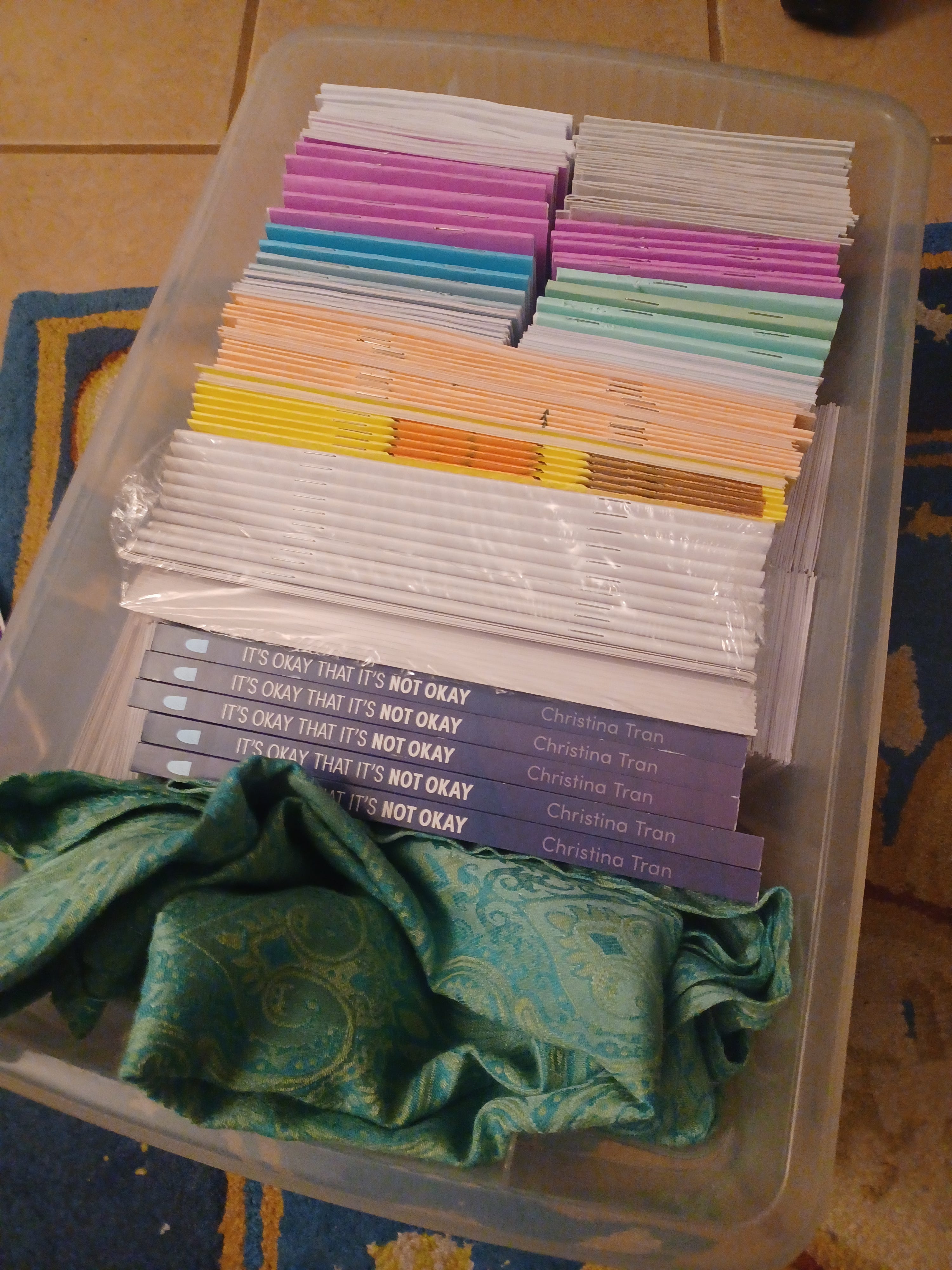
It’s 4 pm on a Friday. I am on my way to table at AZN Zine Fest in Portland, Oregon. I am going to be staying with my cousin for the weekend. Two friends who I haven’t seen in awhile are going to come up to the Fest to see me. My bags are packed, and I am mentally prepared for the airport rigamarole. I will look up public transit to my cousin’s after I get through security and settle in at the gate.
I am pulling up to the Burbank Airport economy lot when I get a text from Alaskan Airlines: “Sorry, AS 649 has been canceled. We’re working to rebook you. If you choose not to travel, you’re entitled to a refund.”
I pull my car through the airport departures loop and exit. I sit in my car by a nearby parklet and text my partners screenshots of the cancellation. I’m wide-eyed and panicked.
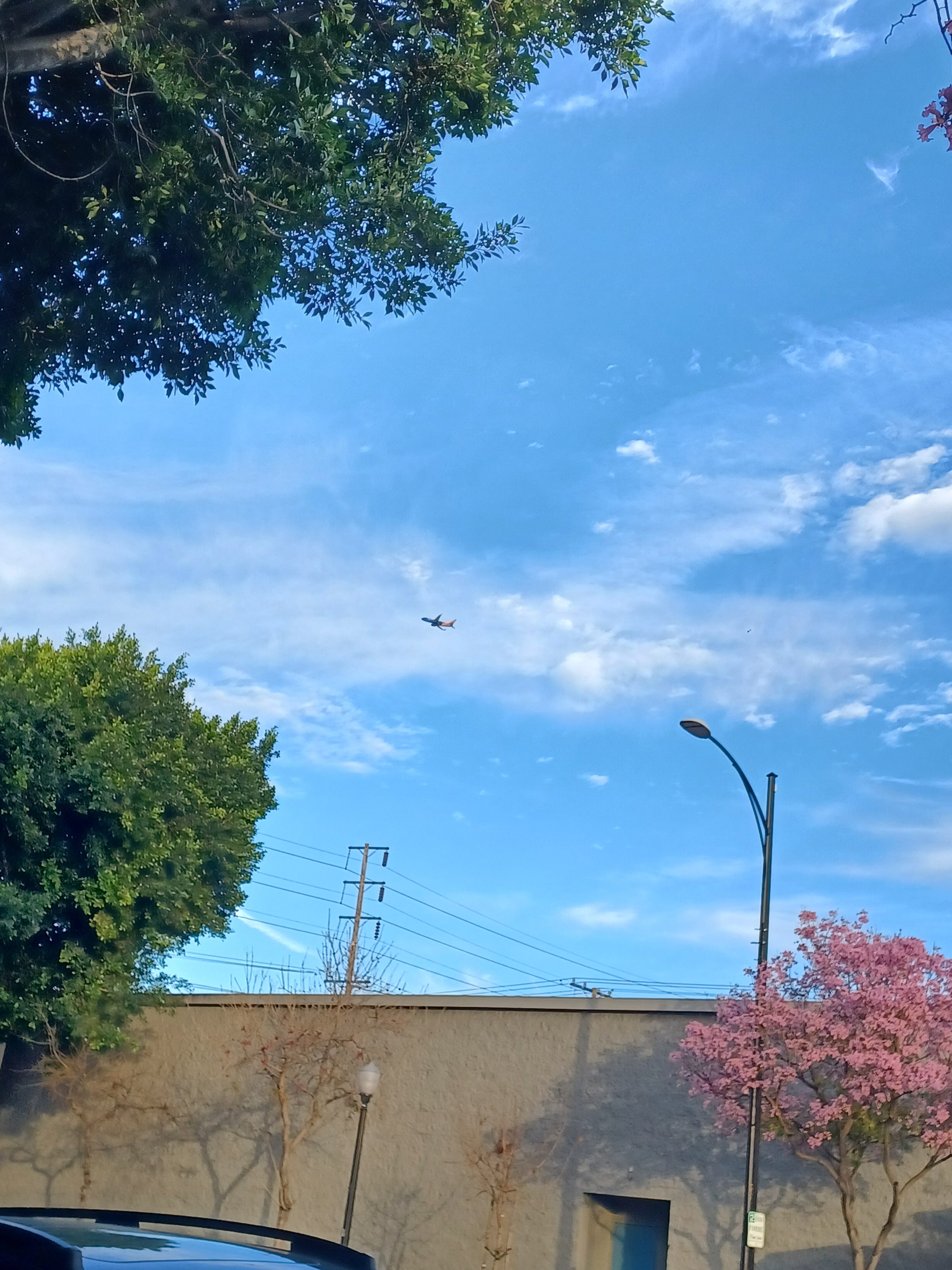
I look up alternative flights. There are a ton of flights that have overnight layovers. A flight that leaves at 9 PM from LAX. Another that leaves from Burbank at 7 am the next morning.
None ideal.
Indeed, all bad options.
I typically book my plane travel meticulously to meet the following criteria1 if I can:
Not flying on the same day as an event. If I have to work, I prefer to fly in one or two days beforehand to give me time to adjust to the new location, especially if there’s a time zone change.
Not departing too early. Any flight before 10 am means waking up before 6, which sometimes makes my body feel ill for the rest of the day.
Not arriving too late. Especially if I’ll still need to navigate public transit, an hour-long airport bus ride home, or an unfamiliar city upon landing.
Whenever possible, trying to avoid LA rush hour traffic getting to and from the airport.
Half an hour later, I get a text from my airline that my flight has been changed to the 7am flight the next morning.
I ask myself, What would a more confident me do in this situation? I expect the answer to be “Go go go! Do the event!”
Surprisingly, a more confident me would actually say: “This is outside my travel boundaries, so I’m not going. Period.” Neutral, confident, and without fear and without catastrophizing. That me would be sad to miss the event, and she would still be frustrated about the flight cancellation, but she would also have faith that things would turn out fine. It would not be the end of the world, nor my career, nor any of the connections that were on the other side of that flight.
Of course, I ignore this flash of insight. Instead of accepting and grieving, or honoring my known boundaries, I try to make it work.2
I drive home…and proceed to negotiate with myself for the next 12 hours about whether to take the rescheduled flight or not. I lie on the floor and revisit Mia Schachter’s Yes-to-No Spectrum and try to figure out where I am in the grey middle of maybe. I am definitely getting both yes and no signals about going or not.


Hearing both yes and no in my body is not unfamiliar.
A core piece of both boundaries work and non-violent communication work is being attuned to one’s own somatic sensations. While acknowledging that there is no one-size-fits-all definition of NVC, Meenadchi says that your body is the root source of all communication.
“Non-violence in communication and action become increasingly possible under 3 conditions:
A person experiences themselves at choice
A person experiences an aligned somatic awareness of their own body
A person experiences an aligned somatic awareness of the collective body.”

“Our bodies know before our brains do, but we listen more intently to our brains because our brains speak the same language we do,” Mia Schachter says. “This is really important in terms of the Yes-to-No Spectrum and making sure that you’re moving through that No side with care, as well as differentiating between what is uncomfortable and what is unsafe. Avoiding what’s uncomfortable prevents growth, but often it’s hard to distinguish what’s merely uncomfortable from what’s truly unsafe due to trauma, past experiences, and conditioning. When we can move slowly and be in conversation with our body as it tells us no, we can begin to explore the things that our body mistakes for unsafe and move through discomfort in order to expand what’s possible.”
This discernment between uncomfortable vs. unsafe is actually so tricky living with autism in a world not built to accommodate neurodivergence. There are bodily consequences to sensory overstimulation, but when our culture doesn’t take those effects seriously, we’re gaslit into believing that we’re just ‘too sensitive’, and that maybe we can just ‘push through’ or ‘get over it’. It’s not as apparent as being allergic to peanuts and avoiding peanut butter (and having airlines provide alternative snacks to prevent allergic reactions).
Megan Anna Neff distinguishes between anxiety and sensory overload in her book Self Care for Autistic People.
“Another critical distinction is learning the difference between anxiety (which is emotional) and sensory dread. As explained by Dr. Jonathan Dalton, licensed psychologist and founder and director of the Center for Anxiety and Behavioral Change, anxiety is the fear of potential future events driven by internal thoughts—differing from dread, which is the anticipation of known discomfort. Sensory dread, often experienced by Autistic individuals, is the fear of known situations that can cause sensory overload. For example, you may feel sensory dread when anticipating visits to the mall, dentist, or grocery store, as you know these environments will likely cause sensory overload.”
Saying no as a self-accommodation to an overstimulating environment is a gnarly combination of both: Sensory dread wanting to say no, and social anxiety chiming in about all the consequences of not saying yes. The paralysis comes when the different parts of myself are arguing internally about what is actually safe or unsafe, with each side getting more adamant and more extreme to prove their point.
There is also a cheerleader part of me who believes!in!myself! Part of me who wants to grow by stretching towards that which is uncomfortable and not unsafe. There are times when I need to psyche myself up to go to an event I’m nervous about, and I’ve been grateful for the times I’m able to get my body there. The unfortunate thing is when the cheerleader turns bully and dismisses my resistances for the sake of achievement on the terms of a neurotypical world. When she’s refusing to listen to what my body is trying to tell me.
Regardless of whether there is (or can even be) an objective assessment on whether this situation was uncomfortable vs. unsafe, my body didn’t feel safe the weekend of my flight cancellation. I had already planned in a full recovery day for tabling at AZN Zine Fest for 6 hours on Saturday…I wasn’t sure what kind of recovery I would need if I stacked a travel day and going straight from airport to venue on top of that.
Some signs that my body has been trying to say no over these 12 hours:3
Hesitation in my throat area.
Even after I decide I can try, I keep spinning back the decision in my head all night long.
In the early morning hours, I keep getting small shimmer shakes in my body as I wait to leave for the airport.
Wanting to scream into a pillow.
Pressure at the back of my eyes that mean I want to cry but can’t.4
I end up sitting in a parking lot outside the airport at 5 am, while the sun rises over Panda Express, crying to my new boo, talking myself in circles about whether I can actually do this or not.
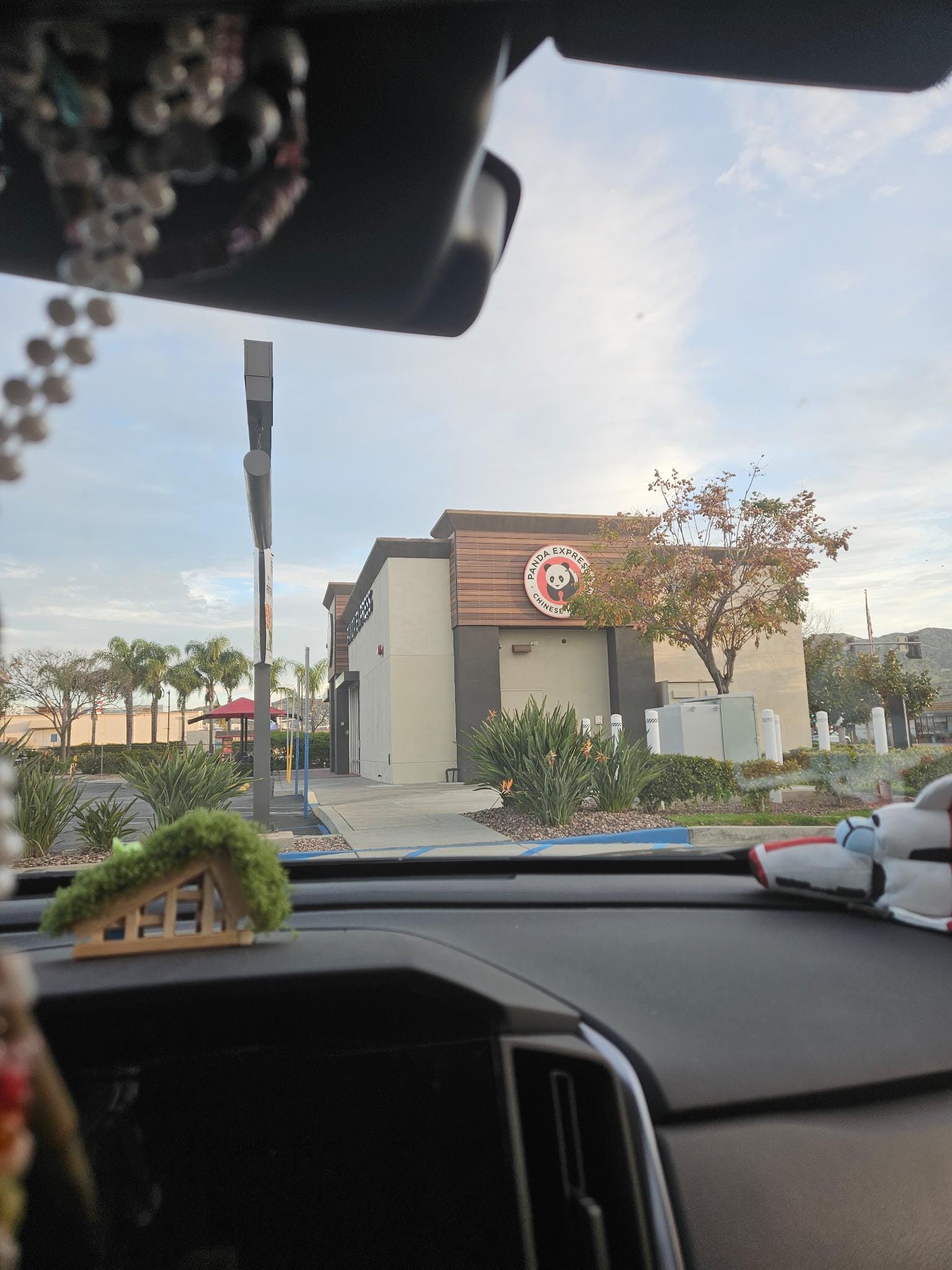
I am genuinely curious whether I will feel better after I let out the tears, and if that will give me enough release to go ahead with a yes enough to get into a security line to get onto a plane…even if afraid, even if nervous, but still consentful enough to say yes to myself.
But every time I get to a ‘yeah, okay, maybe’ in that parking lot, I just start crying again. Until I am so exhausted and so close to departure time, that I resign myself to a ‘no’.
The no feels like relief. An immediate smile on my face. (Which I promptly squelch down and try to wipe away because: how dare I.)
My body has been telling me no…adamantly.
And my body is happy when I finally listen to my no.
But my brain is still learning that that version of no is okay.
aka self-accommodation!
Negotiating with myself is the equivalent of someone else pushing back against a ‘no’ until they hear the answer they wanted in the first place…especially if on technicality or via guilt-tripping.
Overriding my nervous system’s cues to try and force a ‘yes’ only further erodes the trust I have with myself.
I’m slowly learning that another sign that my body is trying to say no is when I spiral into overthinking and too much scenario planning. It’s a sign of anxiety, which is a sign of a ‘no’ I’m having a hard time saying. Often, lately, that anxiety is about me pushing past a previously set self-boundary.
What a generous peek into your process! As well as a great reminder for me to actually read the DNVC zine I bought ages ago. As well as a great pointer toward additional resources and approaches to overwhelm and anxiety.
I was so sad to miss you that weekend, and also so surprised to end up with a table space myself at the Fest; you were apparently not the only one who got waylaid! I look forward to actually tabling WITH you next time. Thank you for all of the above <3
And Yay for your compassionate bae(s)!
Love this <3