
Sending out roots
even with one foot out the door

(Side thought: When I started posting on Substack, it didn’t yet have a social media component — a feed on its front page. I logged in to draft this post and got sucked into the feed for more than half an hour first. There’s a reason I left Facebook and Twitter. There’s a reason I deleted Instagram from my phone, and have it on my “morning block” list alongside YouTube. Because my brain is too tempted by shiny words to ignore the feeds on their own. I can’t even avoid reading the text on the back of cereal boxes or shampoo bottles some days because my brain will read the words in front of it. I support her by setting up boundaries, putting things out of reach. I don’t know what to do about the Substack feed yet — or the LinkedIn one, as I’m jobhunting again and find myself needing to be on there…but am I also supposed to have a ‘social media strategy’? My main strategy has mostly been ‘handsend links to friends and discords one by one’ since 2011.)
Wandering Grace is a project about (dis)placement and (un)belonging. I try to post 1-2 essays a month and am grateful for anyone here in the quiet ponderment with me. Today is a short essay asking: what are the (small) practices for committing to place.
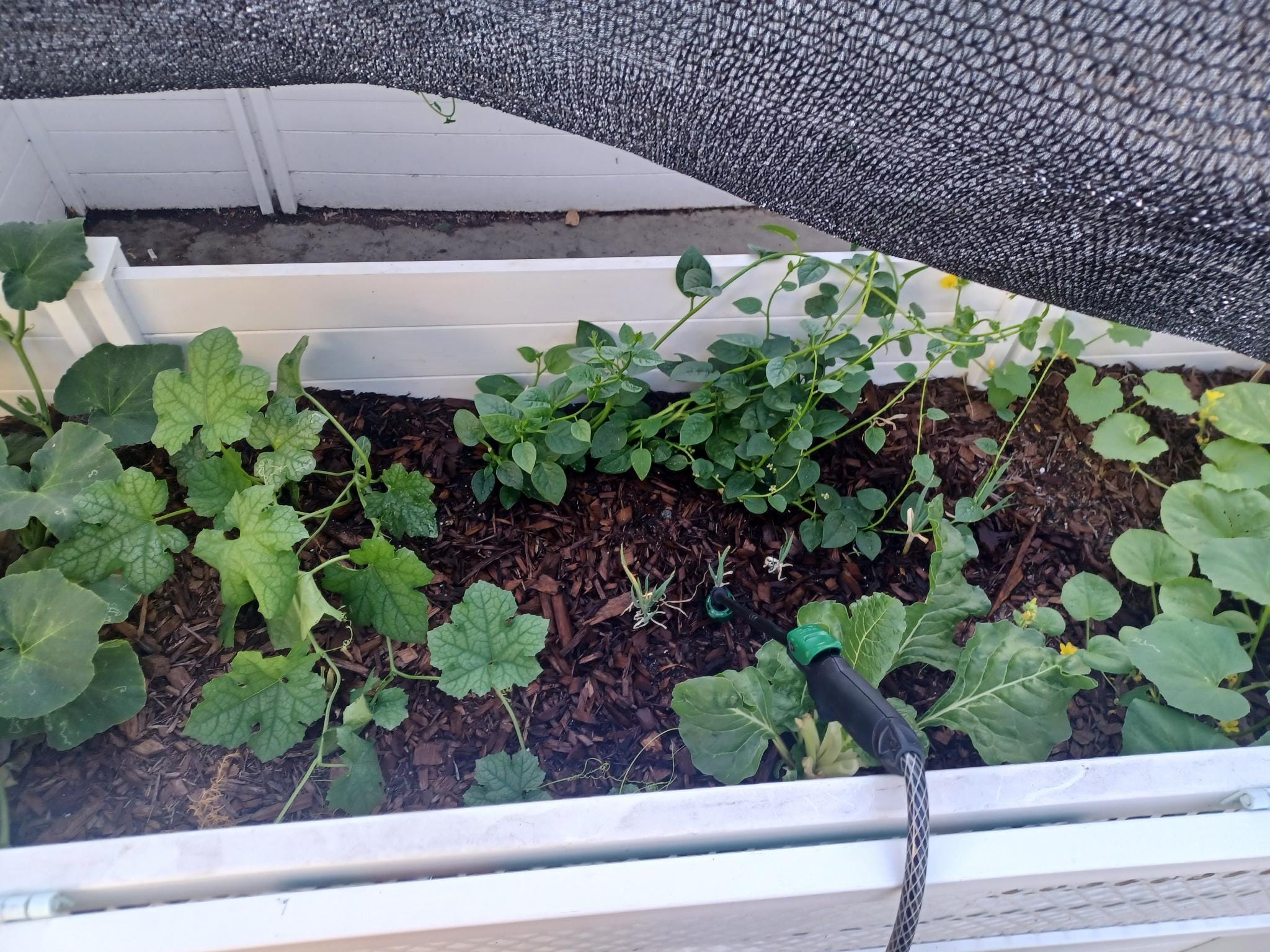
I have until October 4th to sign up for another planter box with the community garden at my local library. Each participant receives/stewards a small raised bed of soil to use and experiment with and learn from and plant in.
I am midway through participating in the summer cohort, and I can’t decide whether to sign up for another go. Partially because of that familiar pesky thought in my head, “But what if I move?”
When I lived in Austin after college, I had opportunity and interest to sign up as a volunteer mentor with Big Brothers and Big Sisters. I kept balking because the sign-up required a three-year commitment to provide continuity for the kids. But what if I move? I did, eventually, move…but not before living in Austin for another five years. I could have easily volunteered, and missed out on the opportunity to.
I recognize the impulse to leave a door open as a protective mechanism. Even potentially a trauma response. To retain a sense of control over when and how I leave. To have it be my choice when so many times in the past it hasn’t been: when our house was sold after my parents died, when master tenants asked me to move out on their timelines, when I ended up scrambling for housing after a craigslist scam.
What does it mean to root, asks a bird who has flown away and flown to all her adult life. To choose a place, to trust a place enough to actually commit to it.
There are people, it occurs to me, who don’t expend so much energy worrying about whether a place, and just live in place. (A friend once told me the freedom of marriage was no longer needing to worry about who or whether because it’s already been decided.) I don’t know that I can ever stop questioning. Or perhaps I should say — it is more familiar to me to question, to have one foot out the door, and perhaps that is the trauma: assuming uncertainty and creating the constant sensation of questioning within one’s self.
In this case and in this season, but what if I move actually translates to but what if I have to move? Properly translated, the anxiety behind the thought is more plain. It’s easier to see the fear that is actually fueling the resistance to commit: what if I can’t land a job in the next two months and I run out of savings and don’t have enough to keep paying my current rent and I will be forced to move….again and again and again…?
You can’t lose your parents young and trust life to not be a trickster. I’m always scenario planning curve balls: of being priced out, or of wildfire’s random destruction, or of bodyaching loneliness. Always something to plan for and pre-emptively protect against. Can’t let my guard down. Can’t just be.
An ironic part of trauma is that safety and security can be more activating to the nervous system because of its unfamiliarity. Some of it has to be rewired, unlearned, reparented.
The practices of laying new neural pathway are uncomfortable:
sign up for the community garden even if you might move again
find an arts space that you show up to regularly even if you might lose again
risk falling in love even if you will miss every single one of the people you learn to love
commit to the things that require a commitment even if you might eventually disappoint
learn to love this tree and this view and this sunshiny heat because it’s better than missing out on living in the place where you currently live
do the scary thing because it reassures your brainbody that you still can
send out roots because maybe, just maybe, you DO get some for keeps
One gratitude of many that I have for my little garden plot at the library is that it has been excuse and routine for getting me out of the house and having small human interactions during a prolonged period of weird (perimenopausal?) mental health.
What the garden bed has taught me this summer:
that not all your seeds will sprout
that there is no scarcity of seeds to put into the ground
that mystery greens from kind strangers can still be yummy
that your loofah sponge vines growing from seeds from Phuong may not have enough time to fruit or dry or become anything harvestable
that there’s still something fulfilling to tending the green
that the swiss chard you got was not the kale you signed up to grow but still became food for your belly
that you know plenty about gardening
that there’s plenty you have yet to learn
In Soil, Camille T. Dungy reflects on the ways her garden connects her to the history of this American land as a Black mother navigating pandemic in a predominately-white Colorado city. She’s also a poet writing about the science and joy of plants. “Science provides reasons for the pleasure I feel when I dig with my hands. Microbes in the soil lower stress responses, raise seratonin levels, and may reduce inflammation in the body and brain. But when I dig, the science is not what I think about. I think about how good it feels to welcome growth.”
This is so familiar. I hope your garden gives you comfort and a sense of accomplishment, as you're taking care of yourself and a little bit of earth (whether you stay/land somewhere else). Gardens are such good therapy, I find.
Beautiful Christina. Resonating w familiar hesitation trusting that maybe this time it will be different.
Good thoughts for you putting your hands in the welcoming soil. Growing things. This in itself feels like Home to me. ❤️